How the 5Rs Framework Applies to Every EPR Sector
Most South Africans know the phrase “reduce, reuse, recycle”. However, that three-step version leaves out two important actions and could place too much emphasis on recycling.
The full framework follows five steps:
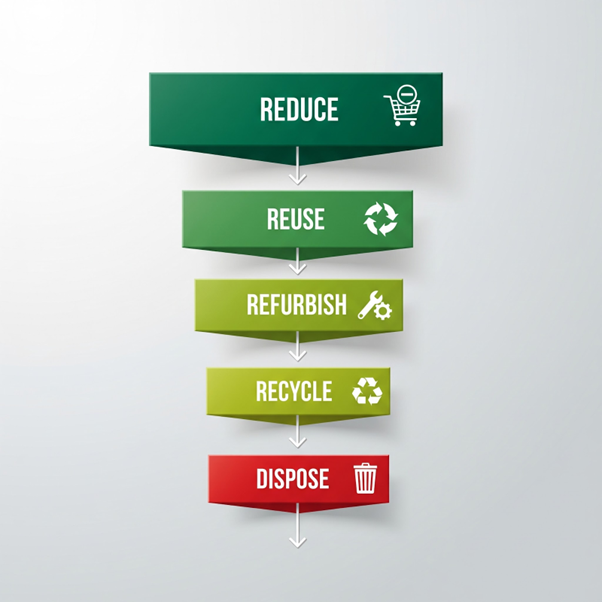
Refuse → Reduce → Reuse → Repurpose → Recycle
The goal is not simply to recycle more. It is to prevent waste where possible and keep products, components and materials in productive use for as long as possible.
One could of course add more steps,
Refuse → Reduce→ Reuse → Recover → Repair → Repurpose → Recycle for 7 Rs, but for today we are rolling repair and refurbish into reuse.
Every stakeholder in eWASA’s five Extended Producer Responsibility sectors (paper and packaging, electrical and electronic equipment, lighting, portable batteries and lubricant oils) can act at different levels of the hierarchy.
What the 5Rs Actually Mean (and Why Order Matters)
The 5Rs form a priority ladder, not a menu. Businesses and consumers should first prevent waste, then minimise it, before considering recycling or other end-of-life interventions.
- Refuse: Prevent waste from entering the system. This could involve declining an unnecessary product, removing avoidable packaging or excluding hazardous materials during product design. It also includes lightweighting or downgauging of products to weigh less.
- Reduce: Use fewer materials and minimise toxicity, energy consumption and waste generation where complete avoidance isn’t possible.
- Reuse: Keep a product or component in its existing function for as long as it remains safe and practical. This includes repair and refurbishing.
- Repurpose: Give a product or material a different function. This includes upcycling and industrial symbiosis, where one company’s residual material becomes another company’s production input.
- Recycle: Process discarded materials into usable secondary resources after higher-value options have been exhausted.
Recycling can recover materials, but it usually cannot recover all the energy, labour, technology and economic value invested in manufacturing the original product. This is why prevention, reduction and reuse sit higher in the hierarchy.
The framework also supports the central principles of a circular economy: designing out waste and pollution, keeping products and materials in circulation and helping to reduce dependence on virgin resources.
Five questions to ask before something becomes waste
- Can we avoid this product, material or component?
- Can we use less of it or choose a less harmful alternative?
- Can the product be maintained, repaired, refilled or used again?
- Can the product or its components serve another useful purpose?
- If none of these options applies, can its materials be recycled safely?
Every R can apply across the five EPR sectors, but some interventions have greater practical significance in particular value chains.
Paper & Packaging
For packaging producers and designers, refuse starts at the design desk. Removing unnecessary layers, components and secondary packaging prevents waste before a product reaches the consumer. Selecting mono-material structures instead of complex laminates can also improve sorting and recycling outcomes.
Design choices increasingly have financial consequences. South Africa’s EPR fee guidance identifies recyclability, recycled content and the absence of problematic coatings or hazardous substances as possible eco-modulation criteria. Packaging that is difficult or costly to recycle may attract higher fees than packaging supported by established recovery infrastructure.
Consumers can refuse single-use carrier bags, avoid unnecessary wrapping and select loose produce where suitable. Producers can reduce material use through lightweighting, right-sizing and the removal of surplus packaging. The Draft NWMS 2026 identifies plastic as having the lowest recycling rate among paper, plastic, glass, metals and tyres, at 43%.
Retailers support reuse when they stock refillable products, introduce returnable packaging and participate in deposit-return or take-back systems. Reuse can create repeat customer interactions rather than conflict with the retailer’s commercial model.
Collected packaging can also be repurposed into plastic planks, boards, poles, and other secondary products, provided the material meets the relevant quality and safety requirements.
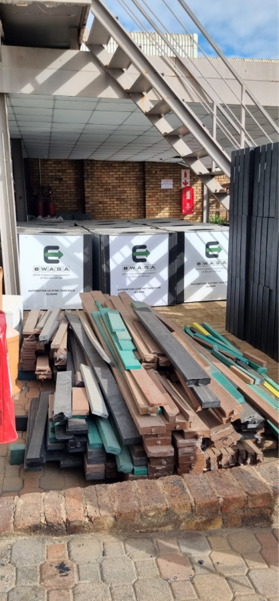
Finally, effective recycling depends on clean material. Separation at source, reliable collection, buy-back centres, and viable end markets all influence whether packaging becomes a secondary resource or a source of contamination.
Electrical & Electronic Equipment (EEE)
EEE producers can refuse waste by designing out hazardous substances, avoiding unnecessary product complexity and making spare parts and technical information available. The national EPR fee guideline specifically identifies repairability, spare-part availability, technical documentation and the absence of brominated flame retardants as potential eco-modulation criteria.
Consumers and corporate procurement teams can also refuse unnecessary upgrades. Before replacing a device, they should ask whether maintenance, a software update, repair or component replacement could extend its useful life.
Reduce applies through durable construction and modular design. A product that allows users to replace a battery, screen, cable or storage component creates less waste than one that requires full replacement after a single component fails.
Refurbishing is a core circular economy activity. Testing, repairing and restoring equipment can return functional devices to households, schools, businesses and community organisations. South Africa’s National Policy for the Management of WEEE places maintenance, repair, reuse, refurbishment and remanufacturing ahead of material recycling.
Formal refurbishers also help build trust in second-hand equipment through traceable sourcing, technical testing, data sanitisation, warranties and responsible management of unusable components.
Waste Electrical and Electronic Equipment (WEEE) can be repurposed through the recovery of metals, components and depolluted plastics for use in other products and industries. However, material recovery should follow reasonable attempts to preserve the product’s original function.
Recycling remains mandatory when equipment can’t be restored. South Africa has prohibited the disposal of e-waste to landfill since 23 August 2021. The Draft NWMS 2026 also notes that WEEE recycling rates were below 10% in 2017, showing why prevention, repair and reuse deserve greater attention. eWASA members reported a recycling figure of 43% on EEE, compared to their put-on-market figures.
Lighting Equipment
Lighting producers and procurement teams can refuse unnecessary waste and hazardous materials by prioritising long-life LED technologies where technically appropriate. LED-only sources are also identified as a potential eco-modulation criterion in South Africa’s EPR fee guideline.
Facilities managers can reduce consumption by designing lighting systems around actual illumination requirements. Occupancy sensors, daylight controls, zoning and efficient fittings can reduce both electricity use and the number of lamps required.
During renovations, functional fittings shouldn’t be replaced automatically. Testing, reconditioning and redeploying suitable equipment supports reuse and lowers project waste.
Aluminium housings, selected glass fractions and other materials can be repurposed or recovered after safe dismantling. However, lamps containing mercury require specialist management to prevent breakage and exposure.
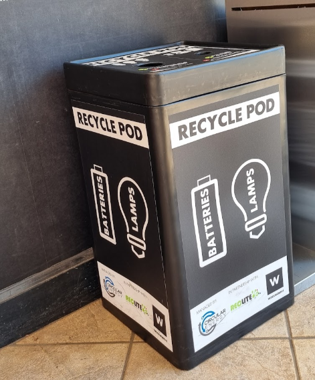
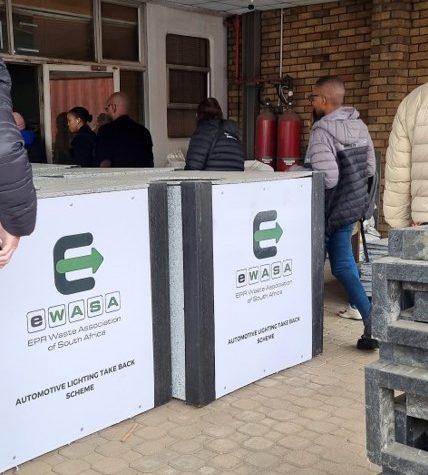
Consumers and businesses must never place fluorescent tubes, compact fluorescent lamps or other hazardous lighting waste in general bins. They should store lamps carefully and send them through compliant collection and recycling channels.
Portable Batteries
Portable battery waste can be prevented through product design. Producers should consider removable and replaceable batteries where this supports safe operation, repair and longer device life. Permanently sealed batteries can make an otherwise functional product unusable when the battery fails.
Consumers can refuse avoidable single-use batteries by choosing rechargeable alternatives where practical. Device manufacturers can reduce battery demand by improving energy efficiency and designing products that use fewer or smaller cells.
Rechargeable systems provide the clearest example of reuse in this sector. Correct charging, storage and handling can extend battery service life and delay replacement. Across the wider battery value chain, suitable larger battery systems may also support controlled second-life applications, although these fall outside the portable battery category and require their own technical assessments.
At end of life, battery materials such as lithium, cobalt and nickel can support new production when safe and economically viable recovery systems exist. This gives repurposing and recycling an important role in retaining critical materials within the economy.
Consumers must never place portable batteries in general waste. Batteries can short-circuit, leak or create fire risks during collection and compaction. Use the eWASA recycling locator to find an approved collection point, or ask your retailer if they do not already have a box for collecting batteries.
Lubricant Oils
In the lubricant oils sector, refuse and reduce begin with product specification and maintenance planning. Long-life lubricants and suitable synthetic formulations may extend service intervals, while well-maintained equipment can reduce unnecessary oil consumption without compromising performance.
Where technically feasible, used lubricant oil can be re-refined into base oil, retaining more of the material’s value than lower-order treatment options. Where re-refining isn’t practical, appropriately treated oil may serve as a raw material or process-fuel input under controlled and legally compliant conditions.
Used oil must never be poured onto soil, into drains or into water systems. Workshops, industrial users, retailers and consumers should store it securely and return it through registered collectors operating within the EPR lubricant oils scheme.
Why Every R Counts Now
The Draft NWMS 2026 rests on four pillars: Circular Economy and Waste Minimisation; Effective and Sustainable Waste Services; Capacity Building and Awareness; and Compliance Monitoring and Enforcement. Each pillar requires action beyond recycling.
The document proposes diverting 40% of collected waste from landfill within five years, increasing to 60% within fifteen years. Reaching those levels will require more than expanded recycling capacity. It will require products that use fewer materials, last longer, can be repaired and are supported by viable reuse and recovery systems.
For producers, moving higher up the hierarchy can affect product costs, EPR fees, waste-management expenses and brand reputation. Eco-modulated fees can reward products that perform better against criteria such as recyclability, repairability, recycled content and reduced toxicity. They can also allocate higher costs to products that require complex collection or treatment.
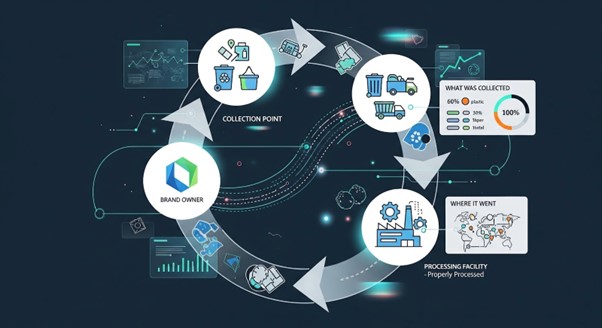
eWASA supports members across five EPR sectors with registration, reporting, take-back systems, recycling networks, technical guidance and sector-specific projects. Our integrated approach also includes waste picker support, SMME development, education and community upliftment.
Together We Can
The 5Rs help businesses and consumers make better decisions before waste is created. They shift the question from “How will we recycle this?” to “Do we need it, can we use less, and how can we keep its value in circulation?”
Recycling remains necessary, but it is the final intervention in the hierarchy. The greater opportunity lies upstream; in design, procurement, maintenance, repair, refill, reuse and refurbishment.
The goal is not simply to process more waste. It is to prevent waste and keep products, components and materials in productive use for as long as possible.
Producers that place identified products on the South African market can learn more through the eWASA EPR compliance guide, review the organisation’s EPR services or apply for eWASA membership. eWASA provides an integrated EPR solution across paper and packaging, EEE, lighting, portable batteries and lubricant oils.
The strongest circular economy outcome is not simply recycling more. It is preventing waste, preserving product value and keeping materials in productive use for as long as possible.