
Spring-cleaning by Waste Stream
Spring-cleaning often begins with good intentions and ends with several mixed bags of unwanted items. When you combine everything, recyclable materials can become contaminated, repairable products could get damaged, and hazardous items could end up in the general waste stream.
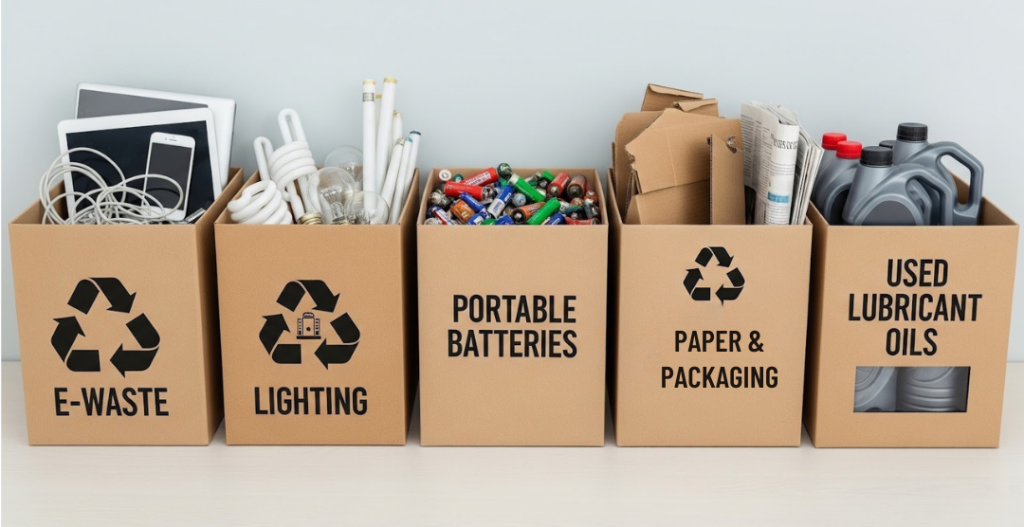
First, decide where each type of item will go. Then create separate collection boxes/bins for e-waste, lighting, portable batteries, packaging and repairable or reusable goods. This simple change turns spring-cleaning from a disposal exercise into a practical circular economy activity.
In South Africa, the waste system includes municipal services, private recyclers, retailer take-back points, community organisations, waste pickers and Producer Responsibility Organisation (PRO) collection networks. These exit routes don’t all accept the same materials, so check the destination before you start collecting.
Step one: map the exit routes
Before the clean-out begins, identify the available options in your area.
Your list may include:
- Your municipality’s recycling or drop-off facilities
- A local recycling collection service
- An e-waste recycler or collection point
- Retailer take-back points for batteries, lighting or electronics
- Charities, schools or community organisations that accept usable goods
- Repair businesses and refurbishment programmes
- Waste picker or reclaimer collection arrangements
- Secure destruction services for business equipment and confidential documents
Use our Where to Recycle map to look for suitable collection points and recyclers. Contact the facility before travelling, particularly if you have large appliances, fluorescent tubes, damaged batteries or a substantial volume of office equipment. Accepted items, operating hours and collection arrangements can change.
Schools and offices should appoint one person to confirm the service provider, collection date and accepted materials. Households can use the same approach by writing the destination on each container.
If you cannot identify a responsible exit route for an item yet, keep it safely separated and continue looking.
Set up a five-stream sorting station
You do not need a complicated recycling room. Five clearly labelled boxes or containers will work for most households, classrooms and offices:
- E-waste
- Lighting (lamps)
- Portable batteries
- Paper and packaging (plastic, glass and tins too – for schools and office recyclers may request that you collect these separately)
- Repair, reuse or donation
Labels should name the waste stream and show examples. “E-waste: cables, phones, keyboards and small appliances” is more useful than a label that simply says “recycling”.
1.Electrical and electronic equipment
E-waste includes products that need electricity, batteries or electronic components to operate. Common spring-cleaning finds include:
- Cell phones, tablets and computers
- Chargers, cables, headphones, and adaptors
- Printers, keyboards, routers and computer accessories
- Kettles, irons, toasters and other small appliances
- Televisions, monitors and audio equipment
- Electronic toys, tools and security equipment
- Disposable vapes
Keep e-waste separate from packaging and general waste. Do not dismantle, burn or break electronic equipment to recover components. Formal recyclers have the equipment and processes needed to separate useful materials and manage potentially hazardous components.
Before disposing of a phone, computer or storage device:
- Back up the information you need.
- Sign out of personal and organisational accounts.
- Remove SIM cards and external memory cards.
- Use the manufacturer’s recommended factory-reset or data-erasure process.
- Ask the recycler about secure data destruction when sensitive information is involved.
Offices and schools should also update asset registers and follow internal approval processes before equipment leaves the premises. Where possible, request a collection record, certificate or report from the service provider.
2.Lighting
Lighting products need their own exit route. This category can include LED lamps, compact fluorescent lamps, fluorescent tubes, vehicle lights and other specialised lamps or fittings.
Keep used lamps intact and separate from general glass. A bottle bank is not an appropriate destination for light bulbs or tubes because their materials, coatings and components differ from ordinary container glass.
Store replacement-lamp packaging during the year and use it to protect old lamps during a clean-out. If the original packaging is unavailable, place lamps in a rigid container with cushioning that prevents movement and breakage. Long fluorescent tubes need additional protection and should lie where they cannot roll or be crushed.
Some discharge lamps, including fluorescent tubes and compact fluorescent lamps, contain small quantities of mercury. Keep them unbroken and send them to a suitable collection or treatment route, not into normal household waste.
Do not place loose lamps where learners, children or members of the public can access them. If a lamp breaks, isolate the area and follow the safety guidance issued by your municipality or collection provider.
3.Portable batteries
Portable batteries are easy to overlook because they appear in so many products. Check remote controls, toys, torches, clocks, cameras, hearing devices, power tools and other small electronics.
Examples include:
- AA and AAA batteries
- 9V batteries
- Button cells
- Rechargeable household batteries
- Laptop batteries
- Power-tool batteries
- Batteries removed from small electronic devices
Remove batteries from equipment where they are designed to be removed safely. Keep the batteries separate from e-waste because loose batteries can short-circuit or create a fire risk during storage and transport.
Cover exposed terminals with non-conductive tape, particularly on 9V, button-cell and lithium batteries. Where possible, separate batteries by type or chemistry. Use a small, sturdy container and do not allow large quantities to accumulate.
Do not include leaking, swollen, punctured, corroded or unusually hot batteries in a normal collection container. Isolate the item from other batteries without touching leaked material, keep it away from heat and combustible materials, and ask the collection provider how it should be handled.
Schools should place battery containers in a controlled collection area and assign a staff coordinator to inspect them regularly. Offices should include battery collections in their health, safety and facilities procedures.
Read our portable battery guidance for more information about battery types, separation, storage and recycling.
4.Paper and packaging
Packaging is often the largest visible waste stream during a spring clean, but not every package has the same recycling route.
Separate materials into practical categories according to the requirements of your local collector. These may include:
- Paper and cardboard
- Glass bottles and jars
- Metal cans
- Rigid plastic containers
- Plastic films or bags, where a suitable collection route exists
- Multilayer or composite packaging, where accepted
Empty packaging before placing it in the recycling container. Remove food and liquid residues that could contaminate dry materials. Allow rinsed items to dry, and flatten boxes to save space.
Do not place broken drinking glasses, ceramics, mirrors or light bulbs in a bottle-glass collection. These products have different compositions and can interfere with recycling processes or create risks for handlers.
Schools and offices should place clearly labelled packaging bins near where waste is generated, such as kitchens, canteens, copier areas and reception points. A single recycling station located far from these areas often leads to contamination.
5.Repair, reuse and donation
An unwanted item is not automatically waste. Before sending something for recycling, ask:
- Does it still work?
- Can it be repaired safely?
- Could someone else use it?
- Does it have all its essential parts?
- Would a donation recipient genuinely want it?
Keep repairable and reusable products separate from waste from the start. Protect them from rain, crushing and careless handling. Attach a note explaining the item’s condition, missing parts or known faults.
Do not donate unusable or unsafe products simply to avoid disposal costs. A donation should transfer value, not a waste-management problem.
For electrical goods, use a competent repairer or refurbisher. Schools and offices should check procurement, insurance and data-security requirements before donating organisational assets. Where products cannot be repaired or reused, direct them to an appropriate recycling route.
Give the clean-out a clear finish line
Avoid running an open-ended collection that remains in a storeroom for months. Set dates for:
- The start of sorting
- The final day for contributions
- Inspection of the collected materials
- Collection or delivery to each destination
- Recording the results
A school can run a one-week classroom or staffroom collection. An office can assign different departments a sorting day and schedule one coordinated collection. A household can work room by room, provided the exit routes are already confirmed.
Measure what leaves. You can record the number of boxes, approximate weight, types of items donated or repaired and equipment sent for recycling. Sharing the results helps participants see that their actions produced a tangible outcome.
Clean out with the next use in mind
Spring-cleaning should not simply create more rubbish. Set up the exit routes before the clean-out begins, and more of what you clear can move towards repair, reuse, refurbishment and recycling instead of landfill.

