
A Guide to Paper and Packaging EPR in South Africa
Recycled Content Targets for Packaging Explained
Including recycled materials in packaging reduces our reliance on non-renewable virgin materials such as crude oil and silica. South African EPR regulations provide recycled content targets for five types of packaging. These targets are expressed as a percentage of the total mass and increase for every year your EPR scheme has been running.
| Packaging Type | Recycled Material Content | |||||
|---|---|---|---|---|---|---|
| Year 1 | Year 2 | Year 3 | Year 4 | Year 5 | ||
| Glass packaging | 20% | 25% | 35% | 40% | 50% | |
| Plastic PET beverage bottles | 10% | 12.5% | 13% | 15% | 20% | |
| Other flexible PET packaging | 10% | 12.5% | 13% | 15% | 20% | |
| Rigid polyolefin plastic | 7% | 10% | 14% | 17% | 20% | |
| Single use plastics | 8% | 12% | 14% | 17% | 20% | |
These targets are set based on the economic viability of recycling each material and how using recycled content would affect the safety and quality of the packaging. Explore additional targets: collection, reuse, and recycling for all packaging materials in the sector-specific regulations.
The implementation of these targets has placed huge demands on the paper and packaging industry. Including recycled content in food packaging puts the consumer at risk should non-food-grade materials come into contact with edible products.
For this reason, South Africa is largely not ready to start enforcing recycled content in consumer packaging. The is exacerbated by a virtually non-existent system for separation at the source. Furthermore, the technology available in South Africa does not allow us to safely produce recycled content suitable for food contact applications. Even with imported recycled content, we cannot test it locally to ensure its health and safety. eWASA is aware of the delicacy of this situation and is monitoring the viability of recycled content in packaging through a dedicated compliance team.
Challenges of Implementing EPR for Paper and Packaging
EPR applies to six different economic sectors, but paper and packaging is often the most difficult to enforce. Here are three packaging industry truths that challenge extended producer responsibility in South Africa.
Sometimes e-waste also contains flame retardants and hazardous gases or liquids like battery acid and hydrofluorocarbons (HFCs). These substances can also leak into nature and harm ecosystems. See a full list of chemicals found in e-waste below:
1. Inaccurate Waste Tracking
Packaging moves extremely quickly; most of it is designed for single use and rapid disposal. This makes it difficult to track how much packaging we use and how much goes to landfill. Municipalities and businesses track things differently, leaving large margins for error. These margins grow wider when you consider that most packaging recycling in South Africa happens in the informal sector.
2. Complex Supply Chains
The packaging supply chain is highly complex and materials move through many hands before they reach the end user. Refineries, manufacturers, printers and label makers all work together to create the final product – so who is the producer when it comes to EPR? The complex structure, combined with international value chains, can make it easier for producers to avoid their EPR obligations and become “free riders.”
3. Mixed Materials and Low-Quality Recycling
Many paper and packaging products are made from specialised materials designed to protect food and cosmetics from spoiling. These multilayer containers are difficult to recycle because they are virtually impossible to separate. When they contain a mix of plastic, metal, and paper, recycling targets become unclear. Even if producers make an effort to collect these mixed materials, recyclers may still not accept them because of the low-value recyclate they produce.
These are just some of the scarce natural materials found in electronics. When we throw away old devices in the form of e-waste, we are essentially wasting these precious resources and denying their use for future generations.
And if we keep producing more electronics without recovering any materials from e-waste, the need for mining – which is damaging to the environment – will only increase. The demand for petrochemicals will also grow, as almost all EEE contains some form of plastic.
Joining a Paper and Packaging PRO for EPR Compliance
A producer responsibility organisation (PRO) can help packaging producers navigate the challenges of EPR and build an environmentally sound business. EPR regulations in South Africa give producers two choices for EPR compliance:
- Design, implement, and maintain your own EPR scheme for packaging waste.
- Join an existing EPR scheme run by a paper and packaging PRO.
Joining a PRO is an easier option that comes with many additional benefits. eWASA is a registered PRO for paper and packaging. Our DFFE-certified EPR scheme gives you access to a network of recyclers and SME partners to help you meet your collection targets and support local economic growth. Learn more about eWASA membership here.
EPR Waste Association of South Africa
Environmentally Sound
Waste Management
Joining eWASA puts a leading environmental services association in your corner. We help you set up recycling systems for your products to ensure complete EPR compliance for your business. As a member, you join our professional community and gain access to networking events, educational resources, and participation in environmental lawmaking.
Packaging Recycling in South Africa: Case Studies
eWASA helps its packaging producer members achieve EPR compliance by investing in technology that makes packaging recycling easier. We connect producers with collectors, recyclers and buyers of recycled materials to build a circular economy in South Africa.
Case Study: A Recycling Facility for Multilayer Plastics
Multilayer plastics are composite products made from more than one type of polymer. The layers are often laminated together and virtually impossible to separate, making them extremely difficult to recycle. eWASA saw this not as a challenge, but as an opportunity for innovation.
Through partnerships with selected municipalities, eWASA has made multilayer plastic recycling a reality in South African landfills. Waste pickers and small recycling businesses can bring the packaging to the recycling facilities in exchange for cash. Here, it is sorted, shredded, and compacted to create a strong recycled plastic we can shape into functional products, including:
- Jungle gyms (each containing 1.2 tonnes of recycled plastic)
- Outdoor picnic tables
- Fencing and shelving
- Eco-friendly trolleys for waste pickers
- Potential future applications: Pallet shelving, signage, and eco-fencing
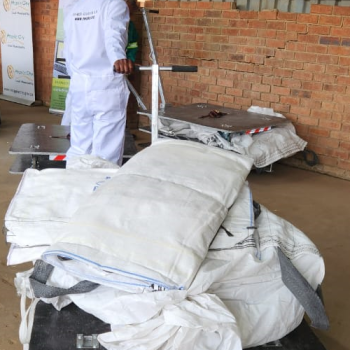
Each jungle gym, for example, uses approximately 1.2 tons of recycled multi-layer packaging, making a tangible contribution to landfill diversion. This initiative is a strong example of circular economy in action, where post-consumer waste is transformed into high-value, long-life products. It delivers:
- Environmental impact through reduced waste-to-landfill.
- Social upliftment via improved working conditions and job creation.
- Economic opportunity through SMME development and market access.
- Compliance support for producers within the EPR framework.
Case Study: A National Polystyrene Recycling System
This initiative highlights the potential of packaging recycling for the circular economy. Investing in recycling technology can make divert a significant amount of waste away from landfills while adding value to our economy.
Polystyrene is often mistaken for a non-recyclable material. In reality, it is 100% recyclable and has a relatively low environmental footprint during production compared to other plastics. eWASA’s EPR scheme for polystyrene producers aims to change the narrative about this valuable packaging material.
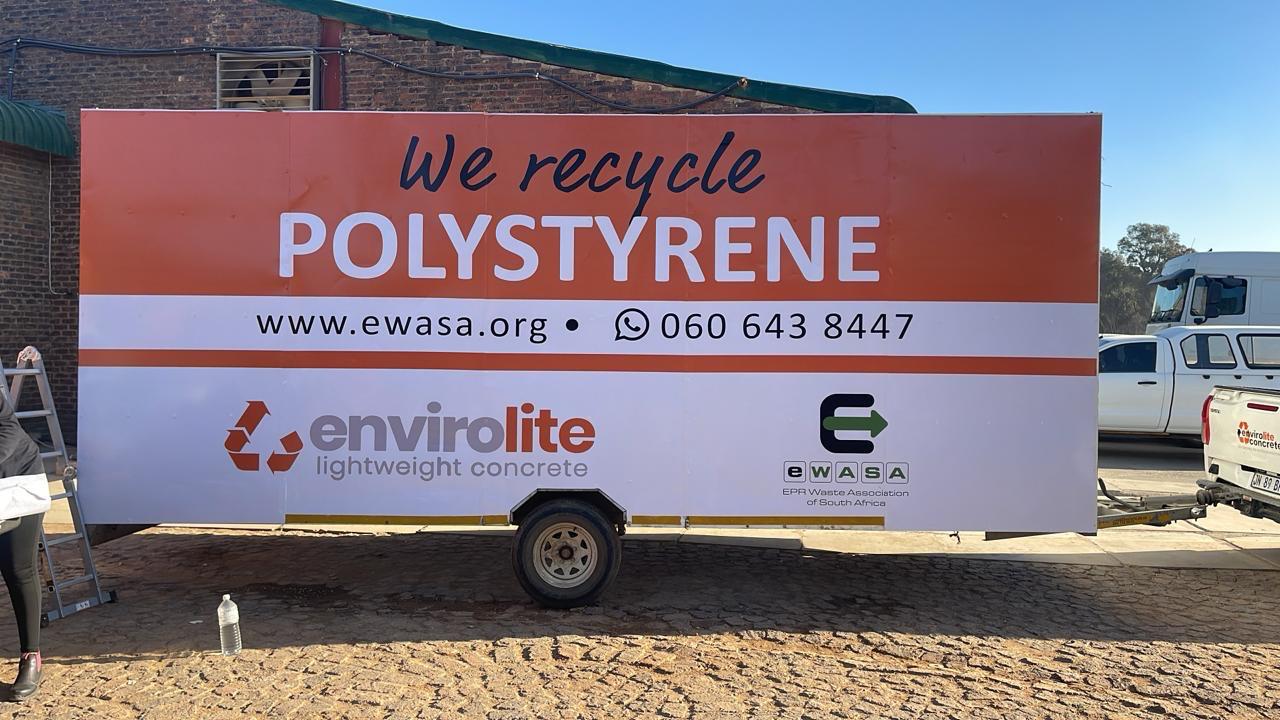
We have helped fund South Africa’s first two polystyrene wash plants and installed polystyrene recycling machinery in eight locations nationwide. These machines compress polystyrene into small bars (ingots) to make it easier to transport for further processing. Recycled polystyrene can be turned into construction and décor materials such as skirting boards, bricks, and picture frames.
Through partnerships with selected municipalities, eWASA has made multilayer plastic recycling a reality in South African landfills. Waste pickers and small recycling businesses can bring the packaging to the recycling facilities in exchange for cash. Here, it is sorted, shredded, and compacted to create a strong recycled plastic we can shape into functional products, including:
Each jungle gym, for example, uses approximately 1.2 tons of recycled multi-layer packaging, making a tangible contribution to landfill diversion. This initiative is a strong example of circular economy in action, where post-consumer waste is transformed into high-value, long-life products. It delivers:
- Environmental impact through reduced waste-to-landfill.
- Social upliftment via improved working conditions and job creation.
- Economic opportunity through SMME development and market access.
- Compliance support for producers within the EPR framework.
Future Trends in EPR for Paper and Packaging
The Department of Forestry, Fisheries and the Environment introduced mandatory extended producer responsibility to South Africa in 2020. Before that, the paper and packaging sector regulated itself on a voluntary basis.
As the legal landscape continues to evolve, many producers have started investing in end-market development for recycled materials. Developing these markets strengthens EPR by driving demand for products made from post-consumer packaging waste. eWASA continues to play a pivotal role in this movement, hosting working groups for its producer members that facilitate conversations between producers and recyclers.
The goal is to identify opportunities for collaboration and form partnerships that create jobs, support EPR, and attract investment into the recycling sector. This way of working is an emerging EPR trend that has the potential to make circular economics more prevalent in South Africa.