
Smart Recycling Equipment and EPR Compliance in South Africa
Extended Producer Responsibility (EPR) is no longer a box-ticking exercise in South Africa. It is a legal requirement, and the pressure to prove compliance is growing.
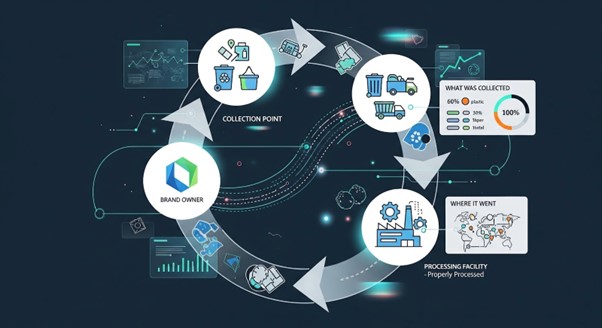
For producers, importers, and brand owners, that means more than funding recycling. It means being able to show exactly what was collected, where it went, and whether it was properly processed.
That is where smart recycling equipment comes in.
What used to be seen as an operational upgrade is quickly becoming a compliance essential.
Why Data Matters as Much as Tonnage
EPR compliance is no longer only about collecting and recycling waste. Companies must also show clear evidence of what was collected, where it came from, and how it was processed.
Producers must either run their own EPR scheme or join a Producer Responsibility Organisation (PRO). They must also collect and submit data to the South African Waste Information System (SAWIS).
NWMS 2026 describes a more digital EPR system for registration, reporting, and monitoring. This means businesses will need more accurate, traceable, and auditable information.

Common EPR Compliance Challenges
Many organisations face the same problems:
Poor data and inconsistent reporting
Manual spreadsheets, paper records, and disconnected contractor reports often lead to gaps, errors, and audit risk.
Contamination and weak source separation
Mixed waste lowers recycling value, raises costs, and can result in rejected loads. In some waste streams, such as batteries and e-waste, contamination also creates safety risks.
Managing multiple waste streams
Businesses often deal with packaging, paper, e-waste, batteries, and oils at the same time. Without integrated systems, reporting becomes duplicated and difficult to manage.
What makes Recycling Equipment “Smart”?
For EPR, smart equipment means equipment that creates reliable, time-stamped, auditable data with little manual input.
The most useful features include:
- accurate measurement of weights, counts, and material types
- contamination detection before waste enters the recycling chain
- connectivity through sensors, mobile devices, or cloud platforms
- real-time tracking of containers, batches, or transport routes
- automated reporting for dashboards, PROs, and SAWIS
- digital traceability from collection to final processing
Examples of Smart Recycling Equipment
AI sorting systems
At materials recovery facilities, optical and robotic systems can identify different materials and remove contaminants. This improves recovery rates and material quality.
IoT bins and smart separation stations
These can track fill levels, weight, and contamination. In workplaces or retail sites, they can also guide users to separate waste correctly.
Reverse vending machines
These machines validate returned packaging, count items, and confirm material types. They can support deposit refund systems and improve collection rates.
Batch-level tracking tools
For regulated waste such as batteries, e-waste, and oils, batch IDs and handling records improve traceability and reduce leakage into unsafe channels.
The software layer matters too
Smart equipment works best when linked to one reporting system.
In a connected system:
- data from sites and contractors feeds into central dashboards
- contaminated loads or missing records are flagged automatically
- audit packs and PRO reports can be generated more easily
This turns real-time tracking into compliance risk management.
A Practical Approach for South African Businesses
1.Start with waste audits
Assess waste types, volumes, contamination levels, and current reporting gaps across your sites.
2.Align data with legal requirements
Set standards for materials, sites, contractors, and evidence needed for each waste movement.
3.Deploy equipment where it solves the biggest problems
Focus on high-impact points such as source separation, transport, sorting, and end processing.
4.Strengthen contractor agreements
Require digital weighbridge data, batch IDs, raw data access, and audit rights.
5.Use data to support better design
As eco-modulated fees develop, good data will help businesses show recyclability improvements and reduce compliance risk.
6.Include waste pickers
Technology should support, not replace, the informal sector. Smart systems can help with verified weights, transparent payments, and safer handling practices.
Business Benefits
Smart recycling equipment does more than support compliance. It also improves operations.
Benefits include:
- better data for SAWIS reporting
- lower contamination and fewer rejected loads
- reduced compliance and reputational risk
- faster reporting with less manual reconciliation
- stronger traceability for customers, regulators, and partners
For many businesses, traceability is becoming a competitive advantage and a legal requirement.
Looking Ahead
NWMS 2026 points to a future where waste compliance depends on stronger reporting, better monitoring, and more enforcement. In that environment, smart recycling equipment will become standard infrastructure.
Businesses can expect growth in:
- digital traceability systems
- AI sorting and sensor-based quality control
- stronger integration between EPR systems, PRO reporting, and operational data
For producers responsible for packaging, paper, e-waste, batteries, or lubricant oils, smart recycling equipment should now be treated as part of compliance planning.
With enforcement pressure increasing and data quality under closer scrutiny, smart infrastructure is no longer only about efficiency. It is how producers prove compliance, protect material value, and support South Africa’s circular economy.
References
- Department of Environment, Forestry and Fisheries. (2020, November 5). Regulations regarding extended producer responsibility (Government Notice No. 1184; Government Gazette No. 43879). South African Government.
- Department of Forestry, Fisheries and the Environment. (2025, December 19). Draft national waste management strategy 2026 (4th draft) (Government Notice No. 6972; Government Gazette No. 53894). South African Government.
- EPR Waste Association of South Africa. (2025, March). eWASA public annual report 2024 [Annual report].
- EPR Waste Association of South Africa. (n.d.). Home. Retrieved February 24, 2026.
- Integrated Waste Management Plan (IWMP). (n.d.). Extended producer responsibility (Waste Act, section 18). Retrieved February 24, 2026.

