
5 Ways to Teach Kids About Recycling and Waste Reduction
Do your kids know what happens to rubbish after it goes in the dustbin? Waste management is not something many people think about, but it’s an important topic to discuss with your children. Teaching young people to be more mindful of the environment is the first step towards building a more sustainable future.
Research predicts that Gen Z and Gen Alpha will be leaders in the recycling revolution. If your kids were born between 1997 and today, they fall into that category. The world is currently in a climate crisis, and while children may not have contributed to its cause, they will certainly have to deal with its consequences.
Teaching kids about recycling, reducing waste, and respecting nature shapes more environmentally responsible adults. Today’s children will eventually be our world’s leaders and have the power to make positive changes that preserve the planet for future generations.
What’s more, Earth is rapidly running out of resources. Learning to be less wasteful during childhood typically carries over into adulthood, helping tomorrow’s consumers make more eco-friendly shopping decisions.
5 Ways To Teach Children About Recycling and Waste Reduction at Home
Children learn behaviours and habits from their parents, so reducing and recycling has to start at home. Here are five practical ways to teach your kids about recycling and waste reduction:
1. Reuse and Repurpose Where You Can
Reusing can be more eco-friendly than recycling, which requires water and energy. Teaching your kids to repurpose old containers, furniture, and clothing shows them that new is not always necessary. It’s also the perfect opportunity for your children to play and practise creative thinking, which will improve their problem-solving skills later in life.

Try turning used jam jars into stationery holders or using old bedding to keep your pets warm in winter to show your kids the value of repurposed items.
2. Discourage Overconsumption
How many ads have you seen today? Just like you, your kids are bombarded with advertising every day. It’s important to lead by example, teaching them the difference between wants and needs, and not to buy something they will never use just because it was on sale. Teaching teens to shop mindfully helps them avoid fast fashion and cheap, disposable products that quickly end up in landfills.
This approach also applies to food. Teach your kids to dish up only what they can eat to minimise food waste in your home.
3. Start a Compost Heap and Grow Your Own Food
Food waste is not entirely avoidable. There will always be vegetable peels, apple cores, and eggshells in your kitchen dustbin. Starting a compost heap in your back garden shows kids that recycling is part of nature. Plus, it’s a fun family project that could drastically reduce household food waste. Once you’ve produced enough compost, your kids can start a veggie patch and learn about eating fresh, healthy food.
4. Keep Colourful, Child-Friendly Recycling Bins at Home
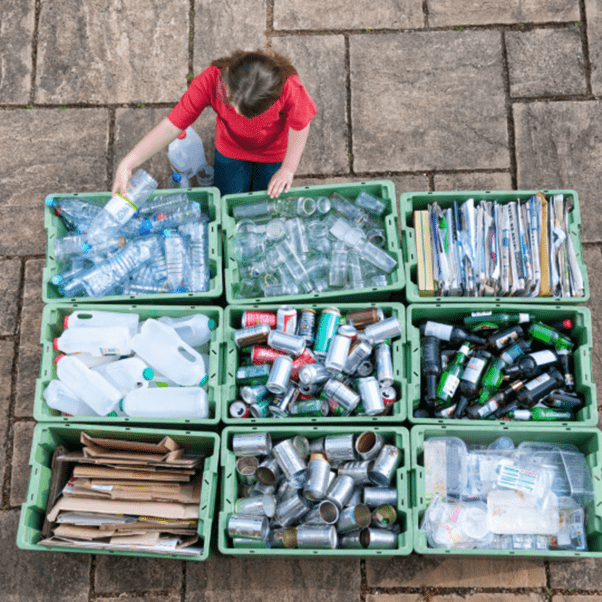
Recycling is a big, boring word. Make the concept more child-friendly by collecting your recyclables in colourful containers or let your kids design a recycling mascot for your home. Teach your kids how to separate recyclables into different bins so they never throw cardboard, cold drink cans, or plastic bottles in the general dustbin again.
Here’s a key to which colours to use for which material.
|
Material |
Colour |
Details |
|
Paper |
Blue |
Most commonly used for newspapers, cardboard, magazines, and office papergreencycle+2 |
|
Glass |
Green or Light Green |
For glass bottles, jars, and containersgreencycle+2 |
|
Plastic |
Yellow |
All plastic bottles, containers, bags, and packaging |
|
Tin Cans & Metal |
Red, Silver, or Light Grey |
Aluminium cans, tin cans, and ferrous metals; colour varies by supplier |
|
Food/Organic Waste |
Brown, Light Brown, Orange, or Green |
Food scraps, garden waste, and compostables |
|
Hazardous Waste |
Red |
Chemicals, batteries, medical waste, and toxic materials |
|
General Waste |
Black, Charcoal, or Grey |
Non-recyclable waste that goes to landfill |
|
Mixed Recyclables |
Green |
Some locations use green bins for all dry recyclables combined |
|
E-waste |
No standard colour |
Dedicated collection points and clearly marked bins |
Make sure your recycling bins are easy to access and at the right height for your kids to use them every day. You can even hold family recycling competitions or teach your kids to raise money from recycling.
Questions to ask:
- Does your neighbourhood have a clear bag initiative to collect mixed recyclables?
- Which materials do the waste reclaimers in your area collect?
- Is there a recycler in your area that offers household pickup when they collect your garden waste?
- Can you take the materials to a nearby collection point?
5. Make “Reduce, Reuse, Recycle” Household Words

Children are observers who learn from their surroundings. Make sure recycling is not a foreign concept to them by filling your home with books, pictures, and conversations about the environment. Familiarise them with the reduce, reuse, recycle symbol and encourage them to ask questions about how it works.
The best way to teach your kids about recycling is to lead by example. Educate yourself on the latest updates and environmental news to spark discussions about how you can do your part at home.
Recycling and Zero-Waste Projects for Schools
If your kids’ school doesn’t have a recycling programme already, why not ask them to implement one? Next time you have a parents’ evening or PTA meeting, try networking with other parents to find out how they can help in their professional capacity. Partnerships between schools and businesses can be mutually beneficial, helping companies carry out CSR and boosting environmental education. eWASA partners with Wessa to support the Eco Schools Programme and work with Waste Smart Schools to make a difference in primary and secondary schools.
Invest in South Africa’s Youth Today
Our children are the future custodians of our planet. Get involved in teaching young people about recycling and waste reduction by launching an environmental awareness program at your local school. eWASA helps businesses meet their EPR responsibilities and make a positive change in their communities – contact us for more information.
Sources:

